- Life Trevels Newsletter
- Posts
- How Does It Feel to Travel Alone?
How Does It Feel to Travel Alone?
Explore the unique experience of solo travel. Learn about the freedom, self-discovery, and challenges that come with traveling alone. Get inspired to embark on your own solo journey and create unforgettable memories.

Life Trevels
November 16, 2024
Traveling alone is an experience that can be both exhilarating and daunting. It offers a unique blend of freedom, self-discovery, and the opportunity to meet new people and cultures. In this article, we will delve into the intricacies of solo travel, exploring its benefits, challenges, and the profound impact it can have on an individual.
The Freedom of Solo Travel
Setting Your Own Pace
One of the most liberating aspects of traveling alone is the ability to set your own pace. You can wake up when you want, explore what interests you, and take breaks whenever you need them. This freedom allows you to fully immerse yourself in the experience without the constraints of someone else's schedule.
Spontaneous Adventures
Solo travel often leads to spontaneous adventures. Without the need to coordinate with others, you can make last-minute decisions and change your plans on a whim. This spontaneity can lead to some of the most memorable experiences, such as meeting a Greek farmer on an island and being invited to stay with them for a month, or joining a group of locals for a tour in China.
Meeting New People and Cultures
Making Instant Friends
Traveling alone can make you more approachable to others. Locals and fellow travelers are often more inclined to strike up a conversation with a solo traveler. This can lead to meaningful connections and friendships that last a lifetime. For example, meeting someone on the streets of Naples, Italy, and being invited back to their house for spaghetti can turn into a lifelong friendship.
Cultural Immersion
Solo travel allows for deeper cultural immersion. Without the distraction of a travel companion, you can fully engage with the local culture, customs, and people. This can lead to unique experiences, such as participating in a lantern festival in Thailand or visiting a sacred forest in Meghalaya.
The Challenges of Solo Travel
Overcoming Loneliness
While solo travel offers many benefits, it can also be lonely at times. Being alone in a new place can sometimes feel isolating, especially when surrounded by groups of friends or families. However, this loneliness can also be an opportunity for self-reflection and personal growth.
Traveling alone means navigating unfamiliar territory without the support of a travel companion. This can be challenging, especially in places where you don't speak the language or understand the customs. However, it can also be a rewarding experience, as it forces you to step out of your comfort zone and learn new skills.
Personal Growth and Self-Discovery
Building Confidence
Solo travel can be a powerful tool for building confidence. Navigating new places, making decisions independently, and overcoming challenges can help you develop a sense of self-reliance and resilience. This confidence can translate into other areas of your life, making you more capable and adaptable.
Self-Reflection
Traveling alone provides ample time for self-reflection. Without the distraction of a travel companion, you can focus on your thoughts, feelings, and experiences. This introspection can lead to a deeper understanding of yourself and your place in the world.
Practical Tips for Solo Travel
Planning and Preparation
While solo travel allows for spontaneity, it's essential to have a basic plan in place. Research your destination, make a rough itinerary, and ensure you have the necessary documents and supplies. This preparation can help you feel more confident and secure during your travels.
Staying Safe
Safety is a crucial consideration when traveling alone. Be aware of your surroundings, trust your instincts, and take precautions to protect yourself and your belongings. This can include staying in well-lit areas, avoiding isolated places, and keeping your valuables secure.
Embracing the Experience
Solo travel is an adventure, and it's essential to embrace the experience fully. Be open to new experiences, engage with the local culture, and take the time to appreciate the beauty and uniqueness of each place you visit. This mindset can help you make the most of your travels and create lasting memories.
Conclusion
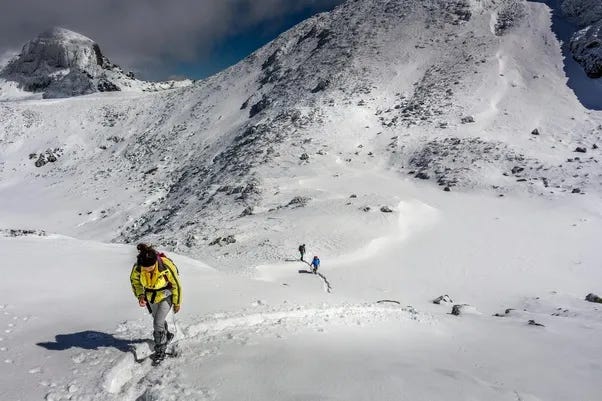
Traveling alone is a transformative experience that offers a unique blend of freedom, self-discovery, and cultural immersion. While it can be challenging and lonely at times, the benefits of solo travel far outweigh the drawbacks. Whether you're exploring a new city, hiking through the wilderness, or simply enjoying a quiet moment in a café, solo travel provides an opportunity to connect with yourself and the world around you in a profound and meaningful way.
So, if you're considering a solo adventure, take the leap and embrace the experience. You never know what incredible memories and friendships await you on the road.
Frequently Asked Questions (FAQs)
Q: What is the block universe theory?
A: The block universe theory suggests that every moment in time exists simultaneously in a block of space-time. This means that the past, present, and future are all equally real and coexist in a four-dimensional continuum.
Q: What is the grandfather paradox?
A: The grandfather paradox is a logical inconsistency that arises from the concept of time travel. It posits that if you travel back in time and kill your grandfather before he met your grandmother, you would never have been born, making it impossible for you to travel back in time in the first place.
Q: What is time dilation?
A: Time dilation is a phenomenon predicted by Einstein's theory of special relativity. It refers to the difference in the elapsed time measured by two observers due to a relative velocity between them or a difference in gravitational potential between their locations.
Q: What is the twin paradox?
A: The twin paradox is a thought experiment in special relativity involving a pair of twins, one of whom travels at high speeds through space while the other remains on Earth. Upon the traveling twin's return, they find that they have aged less than their Earth-bound sibling.
Q: What is a Kerr black hole?
A: A Kerr black hole is a theoretical construct discovered by Roy Kerr in 1963. It is a rotating black hole that does not collapse to a point but into a spinning ring of neutrons, which could act as a gateway to an alternate universe or a different point in time.
Q: What are wormholes?
A: Wormholes are hypothetical shortcuts through space-time that could connect two different points in time, allowing for travel both forward and backward in time. They are a theoretical construct that could potentially enable time travel.
Q: What is the many-worlds interpretation of quantum mechanics?
A: The many-worlds interpretation of quantum mechanics suggests that every possible outcome of a quantum event occurs in a separate, parallel universe. This means that traveling back in time and altering the past would not change the present but rather create a new, parallel timeline.
Q: What are the energy requirements for time travel?
A: Time travel requires immense energy, equivalent to harnessing the power of a star or finding a source of negative energy. Currently, these energy requirements are beyond our technological capabilities.
Q: What are the practical challenges of time travel?
A: The practical challenges of time travel include the immense energy requirements, the stability and safety of theoretical constructs like wormholes and black holes, and the potential for paradoxes and unpredictable consequences.
Q: Is time travel possible according to current scientific theories?
A: According to current scientific theories, time travel is theoretically possible but practically challenging. Theoretical models and scientific evidence suggest the possibility of time travel, but the practical implementation of these concepts is still far beyond our reach.